
What Happens When Clinicians Do the Buying
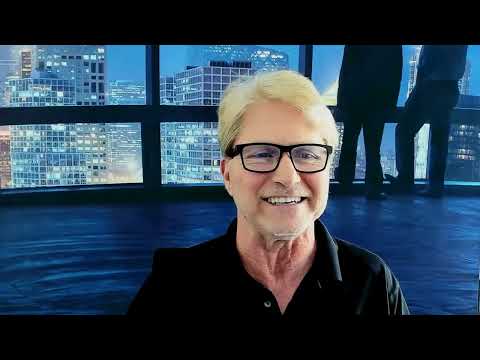
Paul sits down with Steve Chenoweth, co-founder and CEO, and Brian Barth, Chief M&A Officer of Therapy Partner Solutions, to explore what sets a clinician-led acquirer apart. Steve and Brian break down why building infrastructure before acquisitions, not after, is what makes the difference.
Full transcript
Generated from the episode audio and lightly edited for readability.
Hello and welcome to another episode of Paul Martin's crucial conversations. I am Paul Martin, founder and president of Martin Healthcare Advisors. You know, over the last six months, we have had more private conversations with multi-site rehabilitation business owners about partnership opportunities with larger companies than at any other point in my entire career. So, today we are continuing in our competitive limited series on crucial conversations. This series is focused on acquirers who are actively completing transitions and transactions in this market right now. We're talking directly to CEOs and M&A guys in these companies about how their model actually works.
Because as you all know, at the end of the day, valuation is visible. Long-term alignment and ultimate success are not. And serious owners deserve clarity before they make pretty much one of the most important business decisions of their professional lives. Today I am really excited to be joined by Brian Bar and Steve Chenoweth. Welcome Steve and Brian. Hey, thanks for having us. Thanks for having us Paul. Great to have you guys. So just brief background, Brian is the chief merger and acquisition officer and Steve is the co-founder and CEO at Therapy Partner Solutions.
We're going to call you TPS moving forward. TPS is a private act private equity-backed outpatient rehabilitation company with over a 100 locations in 10 states primarily in the Mid-Atlantic and Southeast. Their headquarters are in Fernandina Beach, Florida. Guys, are we ready to go? Let's do it. All right. All right. So, what is the most common reason that founders have chosen to join TPS even when they may have two or three other very credible offers on the table? Yep. I'll take that first if you don't mind, Brian.
Read the full transcript
And so first of all, we're pushing 150 or 160 locations right now. So, just to make that one clarity, u but really I'd say the most common reason that you know founders and owners choose TPS is they recognize that as a company, we're really looking to build long-term operating partnerships. We are not simply acquiring revenue. And we really try to make this clear in our process. There's a lot of capable buyers out there in the market today. And when founders spend time with us, I think they often realize that our leadership team understands the industry really from the inside.
U, many of us on the leadership team are physical therapists who built and ran practices ourselves. So, we try to approach these conversations from the perspective of operators and entrepreneurs rather than just purely financial buyers. Founders, you know, tend to see that we're really intentional about protecting what made their business successful in the first place. Things like a strong clinical culture, high standards of care, trusted patient relationships. We really want to protect all of these things while we build the infrastructure around them to help grow and scale.
So when they compare options, they often realize that with TPS that they're just not they're not just selling a company. They're choosing a team that can, you know, help build the next chapter with them, if you will. Brian, I mean, what do you think? Yeah, I Paul, you and I have known each other for a while. I always hate to say how long, but and you know that I've worked in really the two different models that centralized scaled driven model and now in a partnership centric type model.
And they serve different purposes. They they really do. I mean, some platforms are built for the standardization and rapid integration, but TPS, it's built around that local leadership and the alignment that comes along with that local leadership, which is extremely important. And I think that founders who choose us typically, they want to stay engaged. They they want to continue to participate. They want to continue to lead and grow within, you know, the structure that really respects the brand that they they've created as long as well as that clinical identity.
And and I think that distinction really becomes clear once they understand how we operate and I think that is truly a turning point for them in making that decision. Is there a singular item about the culture? I heard Steve you said the culture word Brian certainly the things you discuss but is there a single sentence that describes culture of TPS? Yeah you know I mean I'd say the thing that people will appreciate about that is that is that it we're serious about the operating size side of the business without compromising clinical integrity or outcomes.
I mean, in our heart of hearts, Paul, we're clinicians. At our core, we're operators who happen to be backed by capital. I mean, we're not we're not capital that happens to own physical therapy clinics. Most of the people on our executive leadership team are physical therapists who built and ran practices themselves. So we tend to approach all the partnerships from the perspective of someone who's actually sat in the owner's chair. Growth in physical therapy only works when our foundation is strong and that means things like revenue cycle management, compliance infrastructure, integration processes, and leadership support that allows practices to scale without losing their culture, I think, is something that people will see.
They they'll also see that in our culture we're committed to the idea that best clinical practices and best business practices go hand in hand. They are complimentary. They are not mutually exclusive. I mean we believe that we put it on our website. The goal really isn't to trade one of them for the other. It's to build an organization that can thrive. And then finally probably the most important part is the associatescentric philosophy. And I want you to hear that correctly and I want your listeners to hear that correctly because most people when I say that say, "But aren't you patient centric?" our belief is pretty simple.
I mean, if you take great care of your clinicians and associates first, if you pour into them professionally and personally, and you maintain uncompromised clinical standards, the business tends to take care of itself. Patient outcomes will follow and our job is to build that infrastructure around them. So they can scale without losing what made them great. U Brian, I mean you can probably add some color to that. Yeah. Yeah. I mean I think from a cultural component you know a lot of folks and you alluded to it early on Paul valuation.
Well we I think during the due diligence process do everything that we can to understand the culture that they have in place. We I mean yeah the numbers are the numbers. Don't don't get me wrong. I mean at the same point in time we have to understand who the people are. We have to understand how they deal with their compliance as well as their clinical their leadership structure so that so that it we don't I don't want to intrude. We'll say it that way. I don't know if that's the right word or whatever, but I think I'm getting my point across as it relates to how we sort of view the cultural component of any business because they're all different.
Yeah. And Steve, I you know, and Brian, I I've heard this from you guys since the first, you know, it was many years ago and we were at a PPS conference and you told me you were you were starting this company and you just gotten it started and it was a people first company. It was a clinician first company. And I think that's a very interesting distinction from the patient first. Because I what I'm hearing is people first also means patient first. So real interesting approach.
So if a seller took the same business and ran it through three different acquirers, where would your model produce a meaningfully different outcome five years later? That's a good question. I' I'd say, you know, five years from acquisition, the biggest difference is probably, you know, likely going to be organizational strength and leadership depth probably. You know, our focus is on strengthening the operating systems of a business. We really do want to develop leaders. We've got really strong compliance infrastructure. Operational performance and scalable growth systems. I mean, those things are really important.
When our partnership is announced to staff I think I think it's our belief that u their associates won't just see this as a financial opportunity for the founders right they need to see this as a financial opportunity for themselves they need to see it as an opportunity for their career and their career trajectory and when we close a deal if everyone doesn't see that as an opportunity it just simply isn't the right deal for us Paul and so I mean because of that I mean I think 5 years later that company is typically not just larger it it's a stronger organization with really deep leadership benches real clear governance which I think is important and employees that are still there and have grown professionally and taken on new roles new leadership responsibilities and really a set of systems that support that sustainable growth and scale.
Interesting. Interesting. So, at the end of the day, what is the something what is something that you guys offer to your partners that most acquirers in this current industry and current market really can't truly offer? What really makes you guys unique? Yeah. Well, there there's only there's only, you know, a few ways that you can skin a cat. And so I'm not going to say that we're the only people that do this, but I do think that one of the things that we really do offer is that operating partnership that's grounded in industry experience.
I mean, we mentioned it earlier, most of our leadership team have built PT businesses themselves. They approach partnerships with a deep appreciation for what the founders have created. And they know that the founders take that personally and we want to take a responsible approach to that. So we've invested heavily in the infrastructure required to support that growth across the integration and compliance and revenue cycle management and our leadership development. I really believe that combinations of infrastructure allows our founders to plug into the leadership and the operating platform rather than just trying to scale everything themselves.
I mean it is a true partnership Paul and we want people to come alongside of us as we come alongside of them. Yeah. You know, I maybe to add on there, Steve. And I think that at the beginning, and Steve and I always like to call it a conversation because that's what we see it as, a conversation between us and folks that we're going to be partners with. And that conversation starts the first time we ever meet. And we're trying to understand what they want because everybody has different desires as it relates to where they are in life and where they want to be in life.
So it and Steve always points out that this is a real pain for me because I'm the transactional guy, but that's because we don't have one structural thought. We're very flexible as it relates to that partnership thought and how we put that partnership together so that we can meet everybody's requirements as best as possible. You know, you can't meet them all, but as best as possible as you can do that. So, I think that's one component that distinguishes us from other people. We're not rigid. We don't have a set structure that we have to live and die with.
We can have that flexibility. I think there's one other component that really makes us unique also and it's in that growth component. We have these different areas that we can grow with in the partnership be it through hospital-based partnerships as well as physician-based partnerships that a lot of other organizations don't do. And that allows us to increase the breadth of our market strength when we're in that market with that with that partner. Things that just possibly aren't available from other organizations that we have done for years and know exactly how to take care of that and roll that out efficiently and effectively.
Yeah, you know, that's a great point, Ryan. I'm glad you brought that up. I mean, one of our you know, true success stories, Paul, is a practice. It was one of our early practices and he had one location and so growth for Jason looked like four denovos. So we went to new adjacent markets and we did denovo startups with him. We also started a very intentional and separate wellness business that's been complimentary and a great attraction and patient retention tool. We brought him a hospital contract where he's managing the day-to-day operations of inpatient, outpatient, and swing bed operations for a small rural hospital that's in an adjacent market to his.
And then we've also got a physician owned management contract where we staff and manage the day-to-day operations of a physician group that was already in market and was already competing with with Jason for patients. He actually staffs and manages that operation now. We've been doing that since 1998. We've been in that management space but also in the private practice space where we own clinics. And so his story is one of playing in the same and adjacent markets in very different and very diversified ways. That really allows him to be grounded in that community and the surrounding communities.
Yeah. Wow. Talk about a mini platform. Yeah. That's great. Yeah. And it sounds like Jason may have had these relationships but were able to help him to execute on these things, you know, post partnership. It well it's a great point. He did have those relationships. It's something that we did not have but he did. What we had that he didn't was the experience of managing physician owned clinics and hospital clinics going back to 1998. I mean treating the patients is the same, right? We can we can you know walk into a closet and treat a patient with some rubber bands and cuff weights and do great therapy.
But doing it in a regulatory environment doing it in a in an operational environment that requires other things like JCO certifications and knowledge of antitrust laws and physician self-referral laws and being able to blend that with our patient care model, our compliance model, and our sense of regulatory knowledge is just it's something he couldn't have done on his own. He'll tell you that it's the local it's the local knowledge being reinforced by the infrastructure that they just don't have and didn't have but have always wanted to have and are willing and I and they're willing to lean into it and I think that's very important leaning into it.
So that's the real fit. Let's go to the other side where are there situations or are there types of owners that you guys would avoid and are just not served by your model even though the valuation may be strong? Yeah, Brian knows what I'm going to say here at his expense. Like deal guys love every single deal, right? And he's never seen a bad deal in his life. And I say that in just I mean Brian's been in this industry a long time. And he knows us well enough that that's just not the case.
And look, we can make just about any deal work financially. And I think most acquirers can, but we really tend to avoid situations where alignment around culture and compliance and long-term expectations just aren't there. Even if it's a great financial opportunity for us. Our model really depends on maintaining really high standards around clinical quality and regulatory compliance. I mean the first company that we bought was a compliance company. It's important to us. We also tend to pass on opportunities where somebody's primarily looking for a transaction rather than a long-term partnership.
I there's nothing wrong with that. I mean, people have put a lot of sweat equity and heart and soul and put their family on hold a lot of times. And sometimes a transaction is what they need. We're probably not the right partner for that. Even though we have transitioned some people into retirement, with the goal of transitioning them into retirement, alignment matters far more than simply getting a deal done. I mean, it just does. I think we've got a disciplined approach with that respect. We don't want to drag sellers and we certainly don't want to drag you or other brokers through a bad process.
It's painful. It's time consuming and we certainly don't want to close a deal that you and your clients have post-close regret because I can promise if you guys have postclo regret, we've got post-close regret. So, walking away from attractive a deal, attractive financial deals, it it's not easy, but it's sometimes necessary and that's really what due diligence is all about. It's about both sides getting to know each other, courting each other and making sure that there's going to be a fit. Absolutely. Absolutely. So, I can't wait to hear how you guys finish complete this one.
So, what's the one promise that sellers out there commonly hear in this market that is just in fact fundamentally unrealistic once the deal actually closes? Good question. Probably the knee-jerk answer that everybody would give you that is nothing is going to change, but I'm not going to give you that one. Oh boy. Yeah. Yeah. We're about three for three, Steve. Now, now we're only two for three on that. So, way to go. Way to go. Well, look, man. I and look, we we've had to learn this a little bit the hard way, right?
I think that a lot of founders hear or think that once they join a platform and if they truly do want to grow that growth will simply accelerate without requiring much investment. Okay. The reality is that building a larger health care organization or PT platform requires ongoing investment and it's investment in people its investment in infrastructure leadership systems you name it. So as the platform grows like we mentioned Jason's platform there will be opportunities for the partner to continue investing alongside the business if they want to maintain their relative ownership and participate in the value being created.
Founders who approach a partnership with a long-term builder mindset tend to do really well with us because they view those opportunities those investment opportunities is as part of growing the enterprise that they really helped to create in the first place. Look, they've been investing in that business their entire career. Just because they took some of the financial chips off the table now didn't all of a sudden create an environment u that makes this business something they shouldn't continue investing in you know and in fact the business should be stronger and more investable with somebody like us than it was previously so I think that mindset of investments's over I got my money is probably the thing that's most unrealistic doesn't mean that a partner like us can't help find creative ways for them to invest or help to fund that investment.
But they do they should take that approach that they want to continue investing in their business that they created. Yeah. And I think that I think that also adds on to your prior question. What type of owner isn't well served as a relate as relates to us? Because if they want we we're a growing organization. We're looking to grow. We're looking for partners to grow. And and even though Steve won't say that, you know, those words, nothing will change because yeah, definitely it's going to change.
And and the reason it's going to change, I think it's important to even understand that health care evolves daily. I mean, the staffing situations, all of those type of things, and we have to change to be able to keep up with those type of things. So I agree that you know those are the words people will say nothing will change but life is ever changing and we have to be willing to accept change and that's hard for people that is hard for people for sure. Sure.
Stephen, Brian, is there a model because I hear, you know, a lot of your in your discussion it's long-term, it's the build, it's growth. Is there an opportunity if a owner has a bench, a strong bench, that owner could partner with you guys and exit within months? Or is there any model that you guys have or structure that you have that you can do that? Yeah, you know, we we've done it a lot actually, but we will diligence that opportunity differently and we just make it clear in our process like if you want me if you tell me you've got a strong bench, I'm going to have to meet that bench.
I'm going to have to want to make sure that I want to be a partner with that bench and I'm going to have to make sure that partner wants to be or that bench wants to be a partner with us as well. So we've done, gosh, in probably the last two or three years, we've done deals where we've brought people into the cap table is somebody was moving out of the cap table. We needed to get to know them. We needed to make sure that they were capable.
We've had somebody who was brought into the cap table because somebody wanted to be gone in three years. Now look, that person needs some development, some leadership development, but that person is awesome. Like I told I told the founder, man, we did this deal because of that person. You're great. You know, we love you and we're going to help you have a great exit, but I mean, this person was really strong, but we've got to get to know that person and that situation. And we will diligence it differently.
We've also done a couple of deals where they didn't want to tell that bench that this was going on, right? Well, you're going to have to in that situation if that's what you're hanging your value on. If you don't want your value to completely plummet by saying, "I'm out the door in 6 months, 9 months, a year." Because your value will plummet if we don't think that we can sustain that. I'm not there. I probably don't have a license in that state where I can actually come in and start treating patients.
My wife isn't going to let me, you know, go somewhere like that and start treating patients. So we need somebody local to be able to run the business and be a partner with. So we will absolutely do it. We just got to get to know that bench for sure. Yeah. Yeah. No, great answer. And I had a feeling that you guys had done that. And many companies that are coming to us, the owner wants out, but then when we look at that bench, there are absolutely you know there's bench strength and you know to capitalize on them.
It's a great It's a great It's a great opportunity for the folks that possibly felt they would never have a chance at that situation. It really is. Absolutely. Well, and Paul, we've actually had people who said they wanted to exit and they start propping people up and they get to when they're supposed to exit and they're like, "Can I stay on?" We're like, "Heck yes. Come on. Let's go." Yeah. Yeah. Yeah. Yeah. So, final question, guys. When you look back on your most successful partnerships, what did the former owners or the founders of these business do that made them so successful with TPS?
Yeah, th this may be your most important question. I'm glad you saved it for last. I mean, it's one thing. I mean, they truly lean into the partnership. And more importantly, they actually let us be a partner for them. And I know that sounds basic. But you know, many of these founders built their companies by being involved in every single decision in that clinic or that group of clinics and transitioning to a partnership with a bigger leadership team like ours, it requires trust. And those founders and owners that truly trust us and our philosophy are going to prosper.
They're going to grow. The founders who thrive are the ones that allow us to do the things that we're built to do. The things that we can do like strengthening infrastructure and supporting operations and investing in growth for the sole purpose of so they can do the things that we can't do. I can't go treat their patients. I cannot lead their team on a day-to-day basis. I can't develop their clinicians. I can support all those things, but I can't do it. And I certainly can't build relationships and dig roots in their communities.
So, we want them to let us do the things that we can do so they can do the things that we can't do and pay more attention to those things. So, and we also we just we want them to stay really committed to clinical excellence and compliance. We need them to have that builder mindset, that entrepreneurs mindset. So, you know that that's who does really well with us for sure. Yeah. Yeah. And Steve, I don't I don't want to leave you guys before you talk a little bit about what you built before you started adding clinics and doing partnerships.
You guys built a strong support structure. Can you briefly touch on that? Yeah, you know, we definitely go to market differently than most of the acquirers in the market. I mean, we talk about ourselves as a family of therapy ccentric companies. So we don't just see patients, right? U, we do see patients, but we see patients a little bit differently. We do them in private practice, which is kind of the core of who we are as, as therapists and business owners and private practitioners. We also staff and manage the day-to-day operations for other people's rehab businesses.
We briefly touched on that. So, health systems, physicians that own their own physical therapy, and then also, in certain home health agencies, we'll go in there and we manage those operations. But what you alluded to is what we consider our performance solutions division. Okay. So, we've got a company that that is geared towards long-term staffing. So, staffing is just a huge challenge in this industry. And we've got a company that's built to make long-term professional placements, not just for our company and in conjunction with our talent department that's an extension of our HR department, but it's a standalone business and it does placements for private practices, hospitals, and health systems all around the country.
I alluded to our first company that we purchased, which was a compliance company. It's important. My other two founding partners and I looked at each other and said, "Well, who's going to do compliance?" Nobody raised their hand. So we went out and didn't and didn't just hire somebody to do compliance for us. We acquire hired a company that was already standing on its own, already had great relationships and great credibility around the country. People know who Mary Dong is and they know how important doing therapy the right way is.
So we bought that company and integrated it into our infrastructure. And then finally, we honestly when we started buying clinics again, we didn't have any RCM or billing infrastructure. We had built a billing company and we had sold a billing company previously, but we didn't have it anymore. So, we were we were in the same boat that we were with our compliance efforts. And so, we didn't just start building a billing department to support our acquisitions. We went out and bought an established well-known physical therapist RCM company.
And so they've got a standalone book of business that has nothing to do with any of the clinics that we own and nothing to do with any of the contracts that we own necessarily. They can go to market on their own, but they do provide our infrastructure for billing for our clients. On the management side of things, not all of them, but some of them. And then they do provide the infrastructure for our partners. We believe that they're really good at it. And we can also take a potential partners' infrastructure in that area and integrate it into what we're already doing and make it stronger and complement it.
So, yeah, we do go to business a little bit differently, but we tried to be scrappy and we tried to scale infrastructure ahead of acquisition instead of trying to chase our tail and support people after the fact. Absolutely. Yeah. Very unique. Very unique. Steve and Brian, you guys have brought our listeners a wealth of information today and I really appreciate the two of you jumping on here and talking to me and talking to our listeners. Thanks guys. Hey, thanks for the opportunity. Thanks for having us.
Good seeing you. For all of you out there who listened in today, if you have a question for myself or for Steve or Brian, just click below and let's talk. Have a great rest of your day and a great weekend. Thank you.
Keep learning
Want to talk about your own business?

Marlton, NJ 08053